


Lasagna with Bechamel Sauce is a testament to Italy’s rich culinary history, offering layers of flavor and tradition.
The creamy Bechamel sauce intertwines with rich tomato and savory meats to create a comforting, unforgettable dish.
I first tasted this delightful lasagna in a quaint Italian restaurant, where each bite was a revelation.
Perfect for holiday feasts or family gatherings, this lasagna is both a showstopper and a comfort food staple.
The History and Cultural Significance
• Lasagna traces its origins to Ancient Greece, where it was originally created by layering pasta and sauce.
• The dish evolved over decades as tomatoes were introduced in Italy, adding a new dimension to the flavor profile.
• In Italian culture, this dish traditionally appears at festive gatherings, symbolizing warmth and hospitality.
• While many variations exist across different regions, the authentic version maintains a rich Bechamel sauce that sets it apart from imitations.


Recipe Overview
Nutritional Information




Essential Equipment Guide
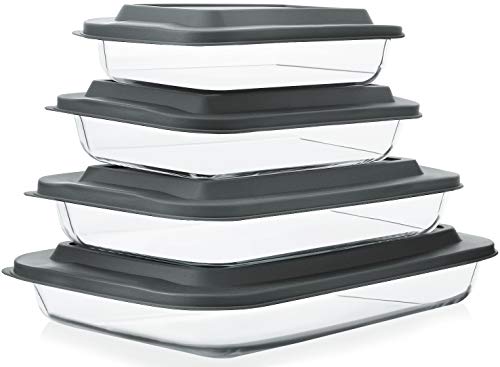
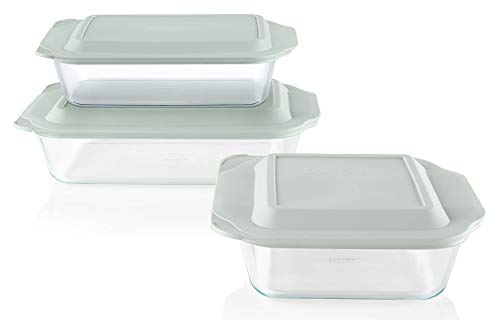
Baking Dish: A deep, ceramic or glass baking dish is essential for even cooking and to hold the layers of lasagna without overflowing. Alternative: Metal pans can work but may affect cooking time and browning.
Whisk: A sturdy whisk is crucial for making a smooth Bechamel sauce without lumps. Alternative: A silicone spatula for stirring, but be cautious of lumps.
Large Pot: Needed for boiling pasta efficiently. Look for a pot with a colander insert for easy draining.



Ingredients
For the Base
|
|
| Amount | Ingredient | Notes |
|---|---|---|
| 12 sheets | lasagna noodles | cooked al dente |
For the Sauce
| Amount | Ingredient | Notes |
|---|---|---|
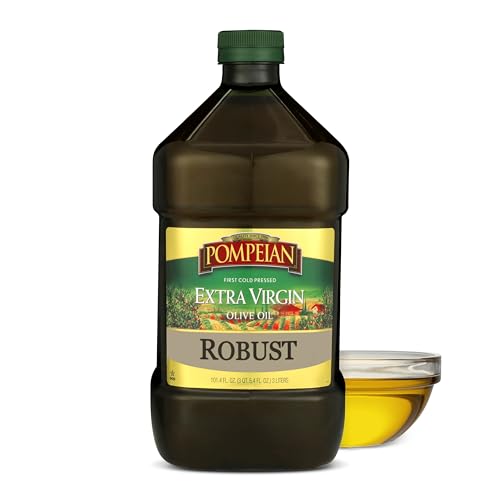
| 2 tablespoons | olive oil | for sautéing |
| 1 pound | ground beef | adds richness |
| 1 pound | ground pork | adds depth of flavor |
| 1 large | onion | finely chopped |
Vegetables
| Amount | Ingredient | Notes |
|---|---|---|
| 3 cloves | garlic | minced |
| 2 cans | crushed tomatoes | adds acidity |
Seasonings
| Amount | Ingredient | Notes |
|---|---|---|
| 1 teaspoon | salt | enhances flavor |
| 1 teaspoon | black pepper | adds spice |
| 1 teaspoon | dried oregano | adds herbal note |
For the Bechamel Sauce
| Amount | Ingredient | Notes |
|---|---|---|
| 4 tablespoons | butter | adds richness |
| 4 tablespoons | flour | for thickening |
| 3 cups | whole milk | adds creaminess |
| 1 pinch | nutmeg | adds subtle warmth |



Preparation Methods
Bechamel Sauce Preparation: Begin by melting butter over medium heat, whisk in flour to form a roux, and then gradually add milk while whisking continuously. This ensures a smooth, lump-free sauce.
Pasta Layering: To achieve the perfect texture, layer noodles without overlapping excessively. This technique allows for even cooking and prevents a dense final product.
Sauce Reduction: Simmer the meat sauce until thickened. This concentrates the flavors and ensures the lasagna holds together well.

Step 1: Prepare Ingredients
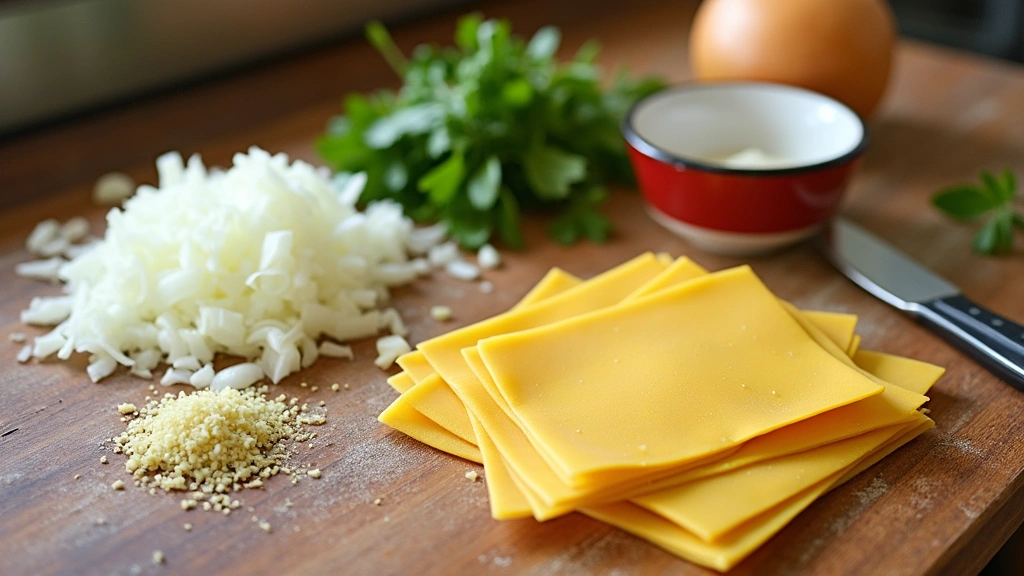
Gather all ingredients and ensure they are at room temperature for even cooking.
Chop onions and mince garlic for the sauce.
Pre-cook lasagna noodles according to package instructions.
Set aside cooked noodles on a towel to dry slightly.
Step 2: Cook Meat Sauce
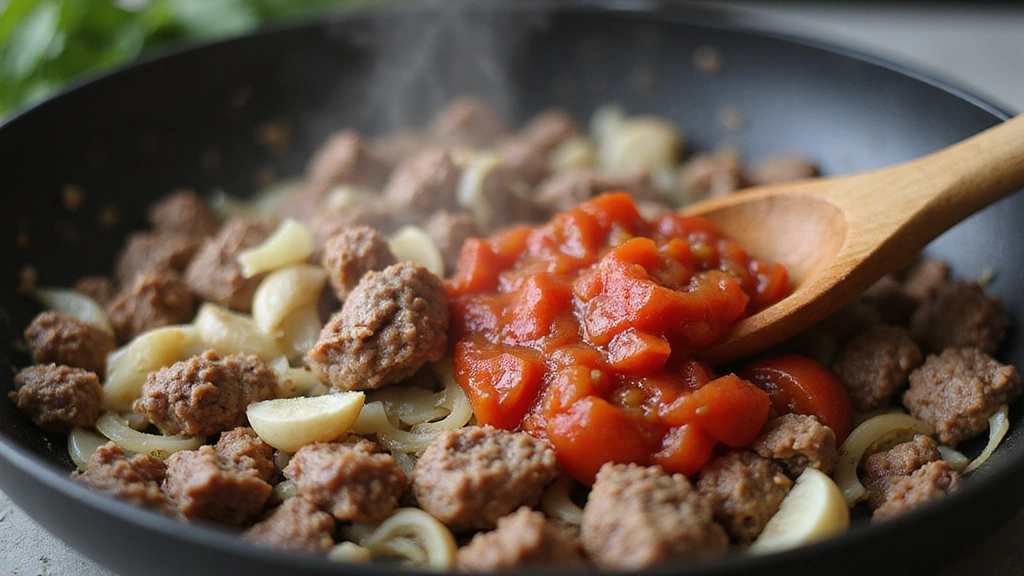
Heat olive oil in a large pan over medium heat.
Add ground beef and pork, cooking until browned.
Add chopped onions and garlic, sautéing until translucent.
Stir in crushed tomatoes, oregano, salt, and pepper, then simmer until thickened.
Step 3: Prepare Bechamel Sauce
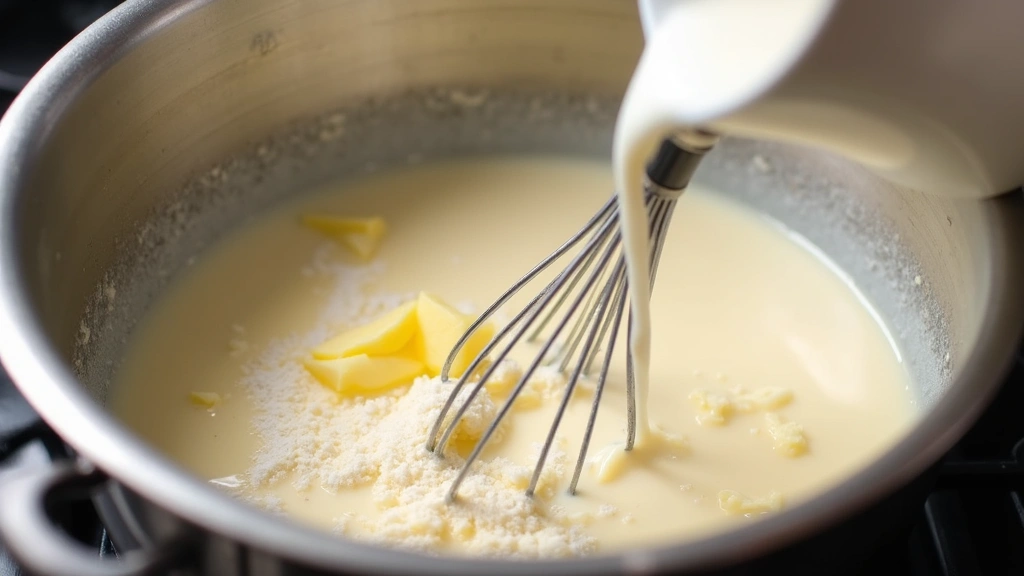
Melt butter in a saucepan over medium heat.
Whisk in flour to create a roux, cooking for two minutes.
Gradually add milk, whisking continuously to avoid lumps.
Season with nutmeg and salt, simmering until thickened.


Step 4: Preheat Oven
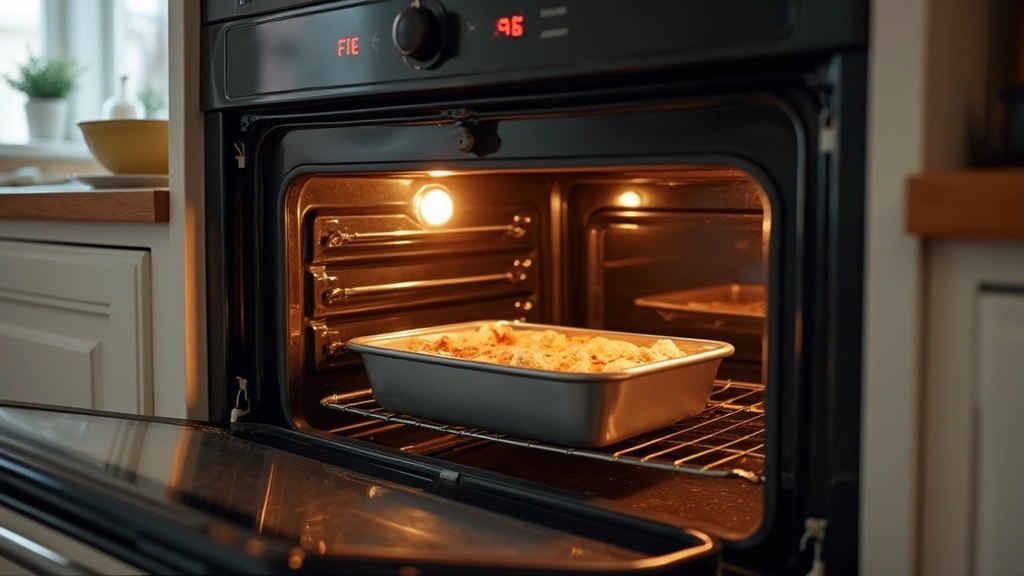
Preheat your oven to 375°F (190°C).
Ensure the oven rack is in the middle position for even baking.
Prepare your baking dish by lightly greasing it.
Gather all prepared components for assembly.

Step 5: Assemble Lasagna
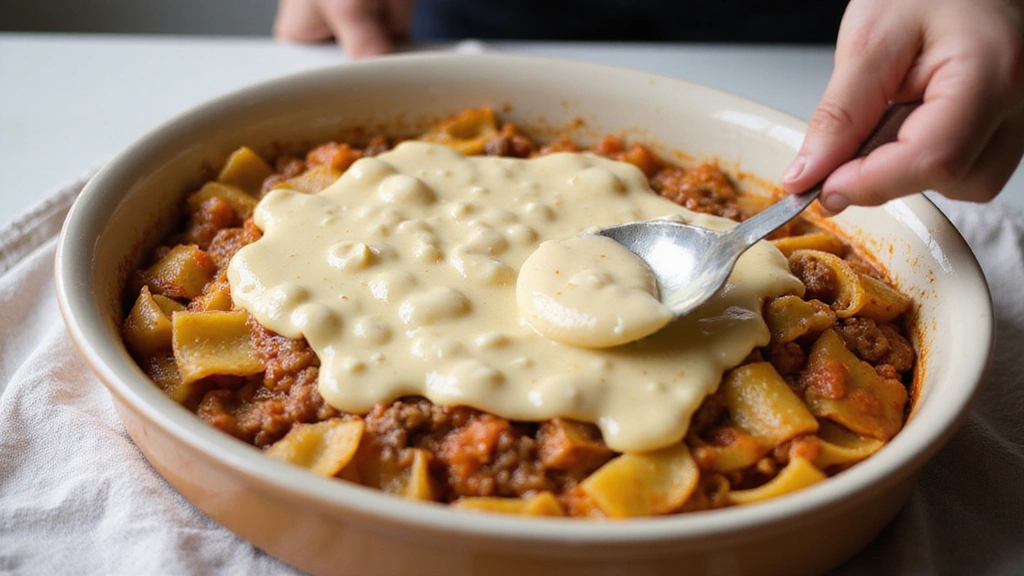
Spread a thin layer of meat sauce on the bottom of the baking dish.
Layer lasagna noodles over the sauce.
Add a layer of Bechamel sauce, spreading evenly.
Repeat layering process until all ingredients are used, ending with Bechamel.
Step 6: Bake Lasagna
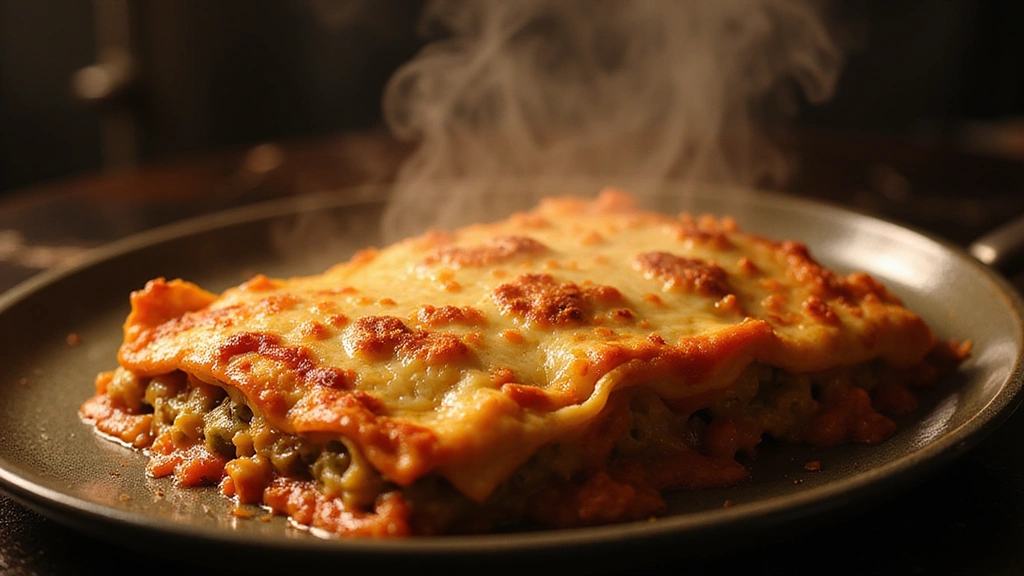
Cover the baking dish with foil to prevent over-browning.
Bake in the preheated oven for 30 minutes.
Remove foil and continue baking for an additional 15 minutes.
Check for a bubbling surface and golden-brown top.
Step 7: Let Rest
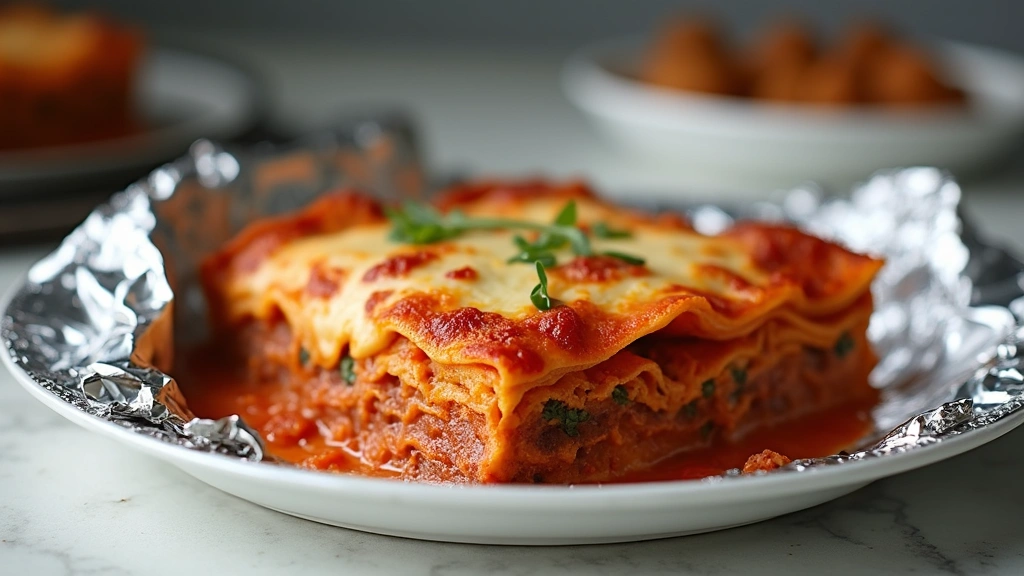
Remove lasagna from the oven and let it rest for at least 15 minutes.
This allows the layers to set and makes serving easier.
Cover with foil to keep warm if needed.
Prepare your serving utensils and plates.
Step 8: Serve and Enjoy
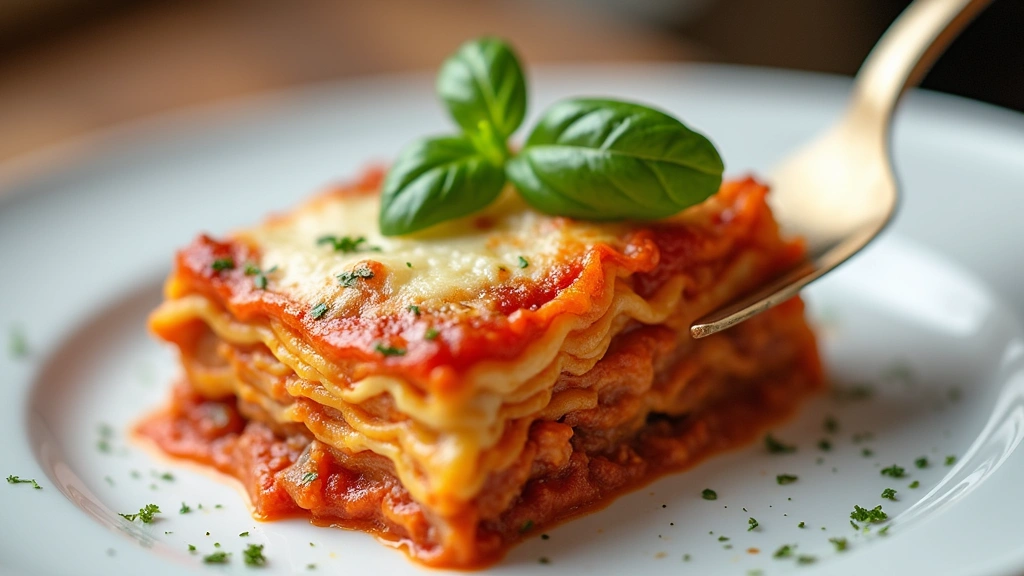
Slice the lasagna into even portions using a sharp knife.
Use a wide spatula to lift each piece out carefully.
Garnish with fresh basil or parsley for a touch of color.
Serve hot and enjoy the rich flavors.




Critical Timing and Temperature Guide
Baking: Bake at 375°F (190°C) for 45 minutes total. Look for a golden top and bubbling edges. Avoid opening the oven frequently to maintain temperature.
Bechamel Sauce: Simmer gently until thickened. Avoid boiling to prevent curdling. Look for a creamy, smooth consistency.
Meat Sauce: Simmer for at least 20 minutes to allow flavors to meld. Ensure sauce is thick enough to hold layers together.
Pro Tips for Lasagna Recipe with
• Ingredient Selection: Choose high-quality tomatoes and fresh pasta if possible. The freshness and quality of these ingredients significantly affect the sauce's depth.
• Preparation Secret: Always let the lasagna rest before serving. This step allows the flavors to meld and makes slicing easier.
• Temperature Management: Ensure your oven is fully preheated to achieve the perfect bake. Use an oven thermometer for accuracy.
• Texture Enhancement: Layer noodles evenly and avoid excessive sauce to prevent a soggy texture.
• Flavor Layering: Sauté garlic and onions until golden to build a robust flavor base for the sauce.
• Make-Ahead Strategies: Prepare the meat sauce and Bechamel a day ahead. Store separately in the fridge and assemble when ready to bake.
• Restaurant-Quality Finishing Touches: Sprinkle freshly grated Parmesan on top for an extra crispy, flavorful crust.
• Equipment Optimization: Use a deep baking dish to prevent overflow and ensure even cooking.
Troubleshooting Common Issues
• Texture Too Dense: This can be caused by over-layering noodles. Ensure even layers and sufficient sauce between them.
• Flavors Unbalanced: If too tangy, add a pinch of sugar to the sauce. If too bland, adjust with salt and herbs.
• Sauce Too Thin: Simmer for longer to reduce excess liquid. Add a tablespoon of tomato paste to thicken.
• Cheese Not Melting: Ensure cheese is freshly grated and distribute evenly for proper melting.
• Burnt Top: Cover with foil during baking and remove towards the end to achieve a golden top without burning.
• Overcooked Noodles: Use al dente pasta to prevent mushiness after baking.


Variations and Regional Differences
• Neapolitan Style: Includes hard-boiled eggs and small meatballs, adding a unique texture and richness.
• Bolognese Variation: Uses a classic Bolognese sauce with pork and beef, often adding carrots and celery for depth.
• Vegetarian Lasagna: Substitutes meat with layers of grilled vegetables like zucchini and eggplant, paired with a tomato basil sauce.
• Roman Style: Features a simpler version with fewer layers and a focus on ricotta cheese.
Food Science Behind the Recipe
• Maillard Reaction: This browning process occurs when baking, enhancing flavor and aroma through chemical reactions between amino acids and sugars.
• Emulsification: The Bechamel sauce relies on emulsification to combine fat and liquid, creating a creamy texture vital for lasagna.
• Gelatinization: The starch in the flour thickens the Bechamel as it absorbs liquid, forming a stable sauce that holds the lasagna layers together.
Frequently Asked Questions
What's the most common mistake people make when preparing Lasagna? Overcooking the noodles, leading to a mushy texture.
Can I use no-boil noodles instead? Yes, but ensure there is enough sauce, as no-boil noodles absorb more liquid.
How can I make this dish gluten-free? Use gluten-free lasagna noodles and substitute flour in the Bechamel with a gluten-free alternative like cornstarch.
What's the best way to store leftovers? Store in an airtight container in the refrigerator for up to three days or freeze for up to a month.
Can I add different cheeses? Absolutely, try adding mozzarella for a gooey texture or Pecorino for a sharper flavor.
Is it necessary to use both beef and pork? The combination adds depth, but you can use either one or a substitute like turkey.
How do I avoid a watery lasagna? Ensure the meat sauce is adequately reduced and let the lasagna rest before slicing.
Serving and Presentation Guide
• Traditional Presentation: Serve in the baking dish with a large serving spoon, allowing guests to appreciate the layers.
• Individual Portions: Cut into squares and serve on individual plates, garnished with fresh herbs.
• Family Style: Place the dish at the center of the table, allowing everyone to serve themselves for a communal dining experience.
• Mini Lasagnas: Prepare in individual ramekins for a sophisticated, individualized take on the classic dish.
Conclusion
Mastering the art of making Lasagna with Bechamel Sauce brings a taste of Italy into your home.
With layers of rich flavors and creamy textures, this dish is sure to impress your family and friends.
Don't hesitate to experiment with variations to make this recipe your own, and enjoy every delicious bite.